Clean the Moon is a Roblox cleaning-and-base-building game where you sweep lunar soil, collect Moon Dust, sell or process it, and reinvest the money into better equipment. The most useful way to understand the game is as a capacity-and-distance loop: clean until your tool or vehicle is nearly full, return to the base, unload, sell or process the material, then upgrade the bottleneck that is slowing the next trip.
The starting point is a Toothbrush. It has a small working range and container, but it is enough to learn the basic route near the base. After the first sales, the visible progression moves through better handheld tools such as the Nail Brush, larger storage, vehicles, and eventually automated machines, conveyors, and cleaning robots. The precise price and increase for several upgrades can change with the game version, so use the current in-game shop or upgrade panel for the final purchase decision.
Start the moon-cleaning route with the Toothbrush
This moment supports the opening route by showing the Toothbrush being used to start cleaning the moon.

The Moon Cleaning Loop
Every run connects five activities:
- Equip a cleaning tool or vehicle at the base.
- Sweep a nearby lunar area and collect Moon Dust.
- Return before the container is full if the remaining route would take too long.
- Unload at the base, then use the Lunar Dust Exchange to turn the material into cash.
- Spend the cash on capacity, cleaning performance, transport, regions, or automation.
Moon Dust is the raw material produced by cleaning. Sand is a processed material, not a second name for Moon Dust: it comes from machines such as the Stone Press and may follow a different value or use. Keeping those materials separate helps you decide whether a trip should end at the exchange or feed a production line.
The early game rewards short, repeatable routes. A full container that requires a long walk back can be less efficient than a smaller load collected beside the base. Once a vehicle or larger hopper removes that travel bottleneck, a farther region can become worthwhile. The objective is not simply to reach the most distant area; it is to keep cleaning, unloading, and selling with as little empty travel as possible.
Tools, Storage, and Vehicles
The main progression systems are easier to compare by the problem they solve.
| System | What it changes | When it matters |
|---|---|---|
| Toothbrush | Starting handheld cleaner with limited range and capacity | Learn the nearby route and make the first sale |
| Nail Brush | More capable handheld cleaning option | Reduce the effort of early repeat runs |
| Range | The area affected by a cleaning action | Choose it when positioning or coverage is the bottleneck |
| Strength | Cleaning performance | Choose it when clearing the same area takes too long |
| Capacity | How much material the tool can hold | Choose it when frequent unloading interrupts a run |
| Vehicles | Larger mobile cleaning and carrying options | Choose them when walking and manual coverage dominate the trip |
| Hopper or dust container | Vehicle storage for collected material | Choose more storage for longer routes |
The three tool upgrade directions are Range, Strength, and Capacity. Range can improve coverage when the player is spending time lining up small cleaning actions. Strength can improve the rate at which an area is cleared. Capacity extends the useful part of a trip by delaying the return to base. There is no universal best order: watch which limit you hit first.
Vehicles extend that decision beyond handheld equipment. The available progression references Push Sweeper, Ride-on Sweeper, Lunar Sweeper, and Vacuum Rover, but the exact unlock order and prices are not fully established by the current evidence. Treat a vehicle as a travel-and-coverage investment rather than an automatic upgrade: it pays off when its larger route and storage reduce more time than its purchase costs.
Base Facilities and Materials
The base is the operating center for cleaning, unloading, selling, processing, and expansion. Place facilities with the whole route in mind. An unloading point that is far from the exchange, storage, or processing machines creates extra carrying time even when the machines themselves are efficient.
The Lunar Dust Exchange is the direct cash-out point for Moon Dust and processed materials. Unload first, then sell or route the material into production. If your container is full, continuing to sweep does not create usable additional income until you make room, so return before a long detour.
Processing machines give the base a second path for materials. The documented machine set includes the Dust Compactor, Stone Press, Packager, and Dust Station. A Stone Press can turn Moon Dust into Sand; other machines can compress, package, or handle dust in a production chain. Current material values and processing ratios are not reliably complete, so compare the live exchange and machine panels before committing a scarce load.
Conveyor Belts connect storage, processing, and packaging equipment. Their efficiency depends on placement and connection, not only on owning the parts. Plan a short path from unloading to storage and then through the intended machines. A misplaced belt can add handling distance or leave a machine disconnected from the material flow.
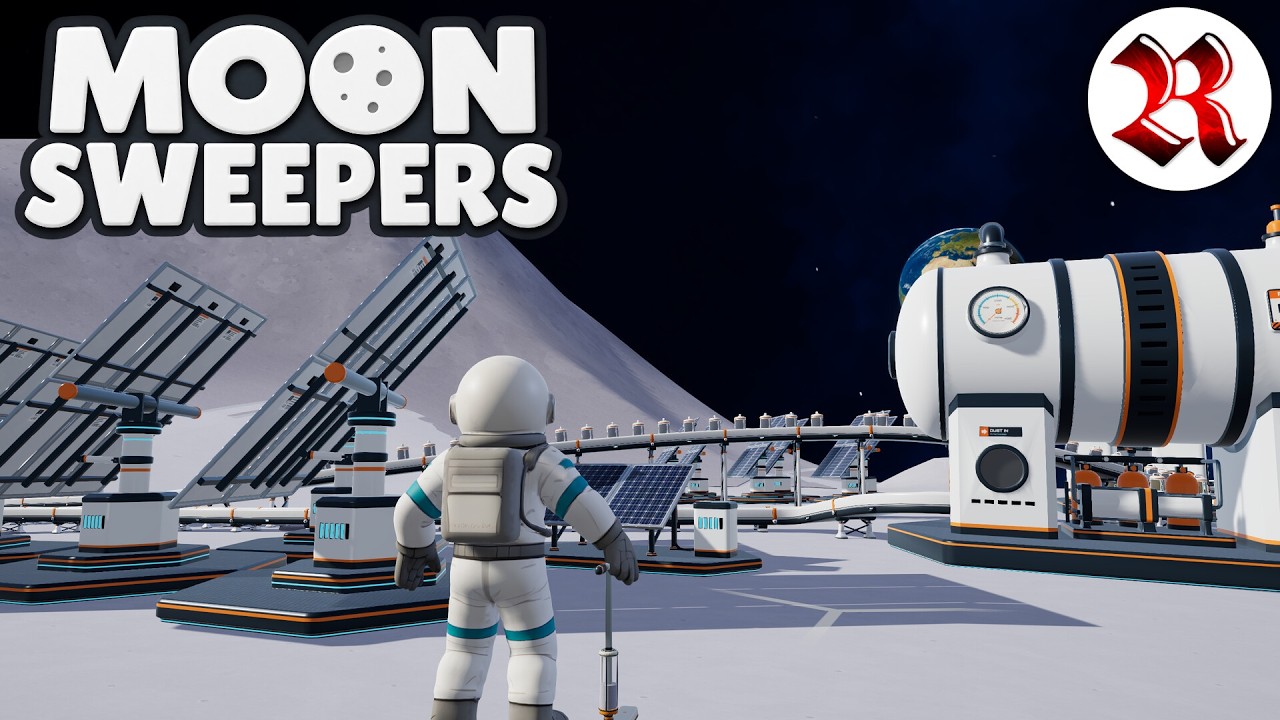
Power is the infrastructure limit for machines, conveyors, and robots. Solar Panels and other power expansion options are referenced as the way to increase available capacity. If a new machine does not operate, check the power budget before buying another production component. Expanding automation and expanding Power should be treated as one decision.
Unlock automation for Moon Dust processing
This moment supports the automation overview by explaining vehicles, sweeper robots, factories, and conveyor belts for processing Moon Dust.
Choosing the Next Upgrade
Use the symptom of the current run to choose the next purchase:
- The container fills quickly: prioritize Capacity, a larger vehicle hopper, or a Dust Container.
- The route clears too slowly: prioritize Strength or a more capable cleaner.
- Each pass covers too little ground: prioritize Range or a vehicle suited to broader coverage.
- Most of the run is walking: save for a vehicle or improve the route before opening a distant region.
- Machines stop or conveyors do nothing: inspect Power and connections before adding more equipment.
- The base feels slow despite good cleaning speed: move or plan unloading, storage, exchange, and processing points as a single layout.
Keep a cash reserve when a new region is close to reach. Spending everything on access can leave you unable to afford the capacity or tool improvement that makes the region practical. A region that requires too many return trips can reduce income per minute even if it contains more lunar ground.
Cleaning robots are a later automation option. The available material mentions Roomba-like lunar robots, but does not establish a complete model list or exact requirements. Consider them after the base has reliable power, storage, and material routing; automation is most useful when it removes a repeated task from an already stable layout.
Regions and Progress Boundaries
Regions divide the moon into larger cleaning targets and provide the long-term expansion path. The current evidence confirms regions, progression, and possible region-completion rewards, but not a complete list of names, unlock conditions, reward amounts, or price bonuses. Check the region panel in the live game rather than relying on an assumed order.
A sensible region decision has three checks:
- Travel: Can your current tool or vehicle reach it without making the return trip inefficient?
- Capacity: Can you collect enough before returning, or will the extra distance create repeated unloading trips?
- Base readiness: Do you have enough cash, storage, and power to use the new area productively?
Day and night change visibility and may affect how comfortable it is to work on the surface. The available evidence does not establish a separate price, refresh, or cleaning-efficiency modifier for the cycle, so do not assume one. Use lighting and the current game presentation to keep the route readable.
What the Current Evidence Does Not Fix
Clean the Moon’s mutable economy means the live game should decide exact numbers. The confirmed overview is the relationship between cleaning, Moon Dust, unloading, selling or processing, and reinvestment. Exact tool prices, detailed vehicle stats, complete region requirements, robot models, processing ratios, and reward amounts are not fully verified here. When a shop or machine panel disagrees with a remembered value, follow the current panel.
The safest early plan is therefore conservative: start with the Toothbrush, run a short route, sell Moon Dust, upgrade the capacity or cleaning stat that is visibly limiting you, and only then spend on distance or automation. That approach keeps the base funded while you learn which part of your own route is actually costing time.
Clean the Moon FAQ
What do you do in Clean the Moon?
You clean lunar areas, collect Moon Dust, return to the base to unload it, and sell or process it. The money funds tools, storage, vehicles, regions, machines, conveyors, power, and later automation.
What should you buy after the Toothbrush?
The early progression points to the Nail Brush, larger capacity, and then vehicles, but the best order depends on your bottleneck. Buy Capacity when you return too often, Strength or Range when cleaning is slow, and transport when walking consumes most of the run.
Is Sand the same as Moon Dust?
No. Moon Dust is the raw material collected while cleaning. Sand is a processed material made through equipment such as the Stone Press, so do not treat its value or use as identical to raw Moon Dust.
Should you unlock a farther region immediately?
Not necessarily. Keep enough cash for capacity or tool upgrades, and check whether your current storage and travel time can support the new region. A farther area is useful only when it improves the full cleaning-to-sale route.